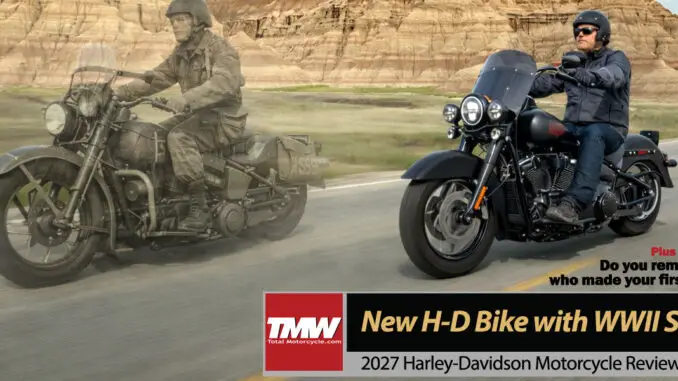
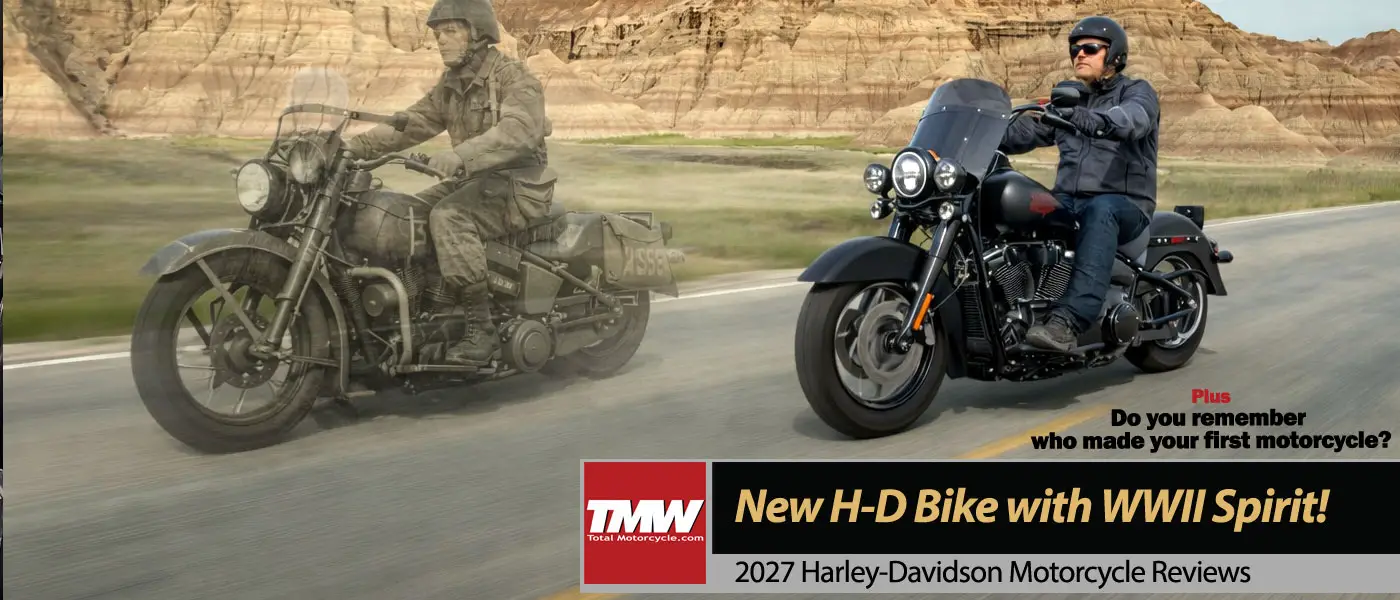
Harley-Davidson’s new Deadwood cruiser embraces and honors not only the spirit of rebellion and individualism the brand has been legendary for but also the freedom and excitement soldiers were seeking returning home WWII. Starting at 17,999 USD the new model is raw, stripped-down with a rugged persona just ripe for customization. In an effort to boost performance and simplify the ride, the Deadwood features Harley-Davidson’s 117 ci (1923cc) 120 lb.ft. (163 Nm) torquey engine with 98 hp (73 kW) Horsepower on a 686lb bike. Gas mileage is also good at 47mpg. While the Deadwood model is full of vintage style, it also features a full complement of Harley-Davidson® technology (ABS/C-ABS), (TCS/C-TCS), (DSCS/C-DSCS) and (TPMS); plus you’ll also get selectable ride modes, all-LED lighting, multi-function LCD digital display and USB-C charging port.
Oh, and it’s only for those in America or Canada, sorry to those G.I.’s outside of North America.
While the Deadwood looks great in deep black (and only available in that scheme), I sure hope someday it will be offered in official WWII Olive Drab (OD) Green. Wouldn’t that have given it a truly iconic color of the era that was liberally used for camouflage on uniforms, vehicles, and equipment? Maybe H-D will read that and offer it up as a “Deadwood WWII G.I. Version” or something! As an AMRY G.I. veteran myself, it’s great to see a honest attempt by a brand to bring back something that means a lot to a lot of people who returned from service after a war. I don’t know if they “enlisted” the help of any veterans in making the model but it’s a great homage piece. Thank you H-D.
Ok, so there you have it on the new Deadwood. Maybe it strikes a cord with you? Maybe it doesn’t? New Harley-Davidson Deadwood Offers up WWII Spirit of Freedom and it’s here at Total Motorcycle today! Plus see all our new 2026 and 2027 Harley-Davidson motorcycle reviews too.
I heard back from my Harley-Davidson rep and for those interested you can turn off Traction control from a hand control switch on the right side. Also H-D wants riders to know that “all our RDRS systems really make the bike’s ride smarter and not intrusive.” Which is awesome because the majority of riders look for “pure riding enjoyment”. Thank you Harley-Davidson for thinking about this fact. I’ll post what H-D recommended to share with riders here at TMW below in their article “HARLEY-DAVIDSON® RDRS SAFETY ENHANCEMENTS DESIGNED TO BOOST MOTORCYCLE RIDER CONFIDENCE”. I hope you take the time to read it.
Plus, Do you remember who made your first motorcycle? Over at our Social Media channel on X, we are asking that question. Why not throw in your two cents in with the other 260 riders who’ve replied and give us a follow when you have a sec?
Thank you for supporting websites in the era of Social Media and AI. I very much appreciate it!!
Q. Do you remember who made your first motorcycle?
🏍️🤔❓
1. Aprilia
2. Beta
3. BMW
4. Buell
5. Can-Am
6. Ducati
7. Harley-Davidson
8. Honda
9. Husqvarna
10. Indian
11. Kawasaki
12. KTM
13. Moto Guzzi
14. MV Agusta
15. Norton
16. Piaggio
17. Slingshot
18. Royal Enfield
19.… pic.twitter.com/1EYHHEwrLb— 𝙏𝙤𝙩𝙖𝙡 𝙈𝙤𝙩𝙤𝙧𝙘𝙮𝙘𝙡𝙚™ 🏍 ᵉˢᵗ ¹⁹⁹⁹ (@TotalMotorcycle) July 19, 2026
Motorcycle-Specific Technology Matches Performance to Available Traction
MILWAUKEE (January 19, 2021) – Harley-Davidson® RDRS Safety Enhancements (formerly known as RDRS) is a collection of technology designed to enhance rider confidence during unexpected situations or poor road conditions. RDRS Safety Enhancements are designed to match motorcycle performance to available traction during acceleration, deceleration and braking, in a straight line or while in a turn. The systems are electronic and utilize the latest chassis control, electronic brake control and powertrain technology.
“RDRS Safety Enhancements are technologies developed by Harley-Davidson and designed to make motorcycling more intuitive,” said VP Marketing Theo Keetell. “Our intent is to assist riders of every skill level in an unanticipated moment when electronic intervention may react more quickly, and with more precision, than our own reflexes can react. A situation that activates an RDRS Safety Enhancement may be rare, but if it occurs, this technology may be invaluable.”
Introduced for many 2020 Harley-Davidson® motorcycles, RDRS Safety Enhancements are standard on all 2021 Harley-Davidson CVO™, Tri Glide® Ultra, Freewheeler®, and LiveWire® models. RDRS Safety Enhancements are optional on all 2021 Touring models in the U.S. The RDRS Safety Enhancements are bundled together, except where noted.
Important Note: Available traction is determined by the road/tire interface. RDRS Safety Enhancements on motorcycles are only able to adjust brake pressure or powertrain torque in an attempt to keep the forces at the tire from exceeding available grip. These technologies do not have the ability to increase grip, or to intervene when the rider has not made a brake or throttle application (e.g. coasting through a corner with the clutch disengaged). RDRS Safety Enhancements on motorcycles do not have the ability to directly influence vehicle direction. This is a key difference between motorcycle RDRS Safety Enhancements and automotive stability control. The rider is ultimately responsible for speed, steering and path corrections.
Cornering Enhanced RDRS Safety Enhancements
Some RDRS Safety Enhancements may be “cornering enhanced,” technology that is motorcycle-specific and a key difference between RDRS Safety Enhancements and automotive traction/stability control systems. Harley-Davidson motorcycles equipped with RDRS Safety Enhancements have an inertial measurement unit, or IMU, that measures and reports the lean angle of two-wheel motorcycles, or the lateral acceleration of a Trike (three-wheel motorcycle), as it navigates a turn. Because many motorcycles have different size front and rear tires, when the motorcycle leans into a turn the wheels begin to rotate at slightly different speeds. The tire traction patch – the part of the tire actually touching the pavement – also changes as the motorcycle leans in a turn. Cornering enhanced technology takes this into account and for optimal performance intervenes differently when the motorcycle is leaned compared to when the motorcycle is upright.
RDRS Safety Enhancements
Cornering Enhanced Electronic Linked Braking (C-ELB)
This technology applies braking effort to both wheels when the rider uses either the hand lever (front) or foot pedal (rear) brake control, which can help many riders achieve better braking performance. The C-ELB system provides more responsiveness and allows for more balanced front and rear braking under a wide variety of brake applications. The system provides more linking when the rider is applying heavier braking and reduces or eliminates linking for light braking and low speeds. When linked, applying the front brake lever alone will cause the system to also dynamically apply an amount of braking to the rear. Applying the rear brake pedal alone will cause the system to also apply an amount of braking to the left front caliper. C-ELB takes into account the motorcycle lean angle or Trike lateral acceleration. C-ELB will alter the proportioning of brake pressure between the front and rear brakes when braking while cornering in an attempt to improve the ability of the bike to maintain the rider’s intended path.
This technology is standard on all 2020-later CVO™ models and optional on most 2020 Touring models.
Cornering Enhanced Antilock Braking System (C-ABS)
ABS is designed to prevent the wheels from locking under braking and helps the rider maintain control when braking in a straight-line, urgent situation. ABS operates independently on front and rear brakes to keep the wheels rolling and prevent uncontrolled wheel lock. Cornering Enhanced Antilock Braking System (C-ABS) is a variant of ABS that takes into consideration the lean angle of a two-wheel motorcycle, or the lateral acceleration of a Trike model. The brake pressure required to limit wheel slip when cornering is typically lower than the pressure required under straight line operation.
This technology is standard on 2020-later LiveWire and CVO models and optional on most 2020-later Touring models.
Cornering Enhanced Traction Control System (C-TCS)
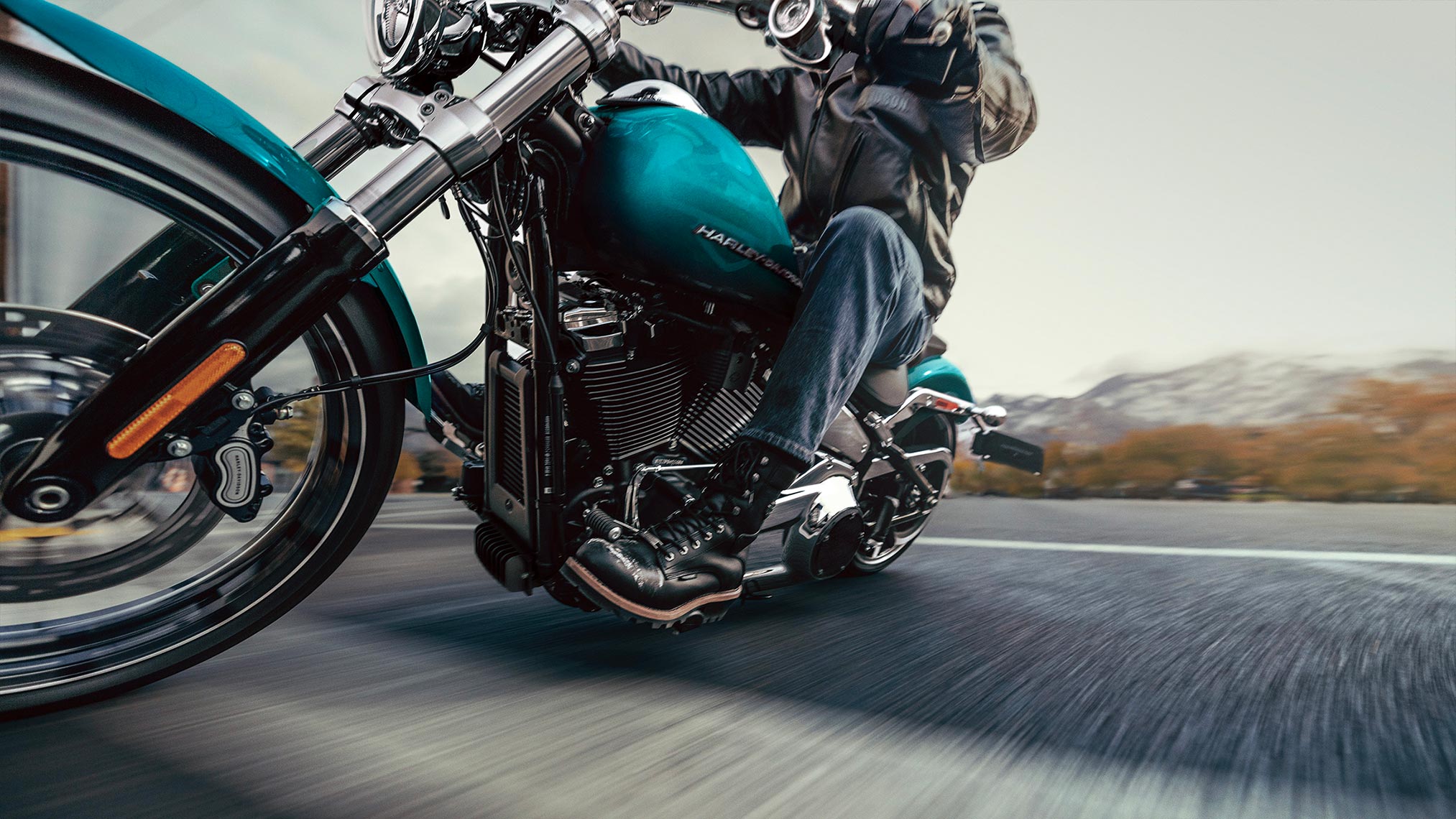
The Cornering Enhanced Traction Control System (C-TCS) is designed to prevent the rear wheel from excessive spinning under acceleration when going straight or cornering. C-TCS can improve rider confidence when available traction is compromised by wet weather, a sudden unanticipated change in the surface, or when riding on an unpaved road. The rider may select one of two traction control modes: Standard Mode is optimized for dry surfaces; Rain Mode is optimized for wet surfaces. The system can also be turned off. The action of C-TCS is also tailored when cornering based on lean angle.
This technology is standard on all 2020-later LiveWire and CVO models and optional on most 2020-later Touring models.
Drag-Torque Slip Control System (DSCS)
Cornering Enhanced Drag-Torque Slip Control System (C-DSCS)
Drag-Torque Slip Control (DSCS) is designed to reduce excessive rear-wheel slip under deceleration, which typically occurs when the rider makes an abrupt down-shift gear change or decelerates abruptly on wet or slippery road surfaces. When DSCS detects excessive rear wheel slip under deceleration it will adjust engine torque delivery to better match rear-wheel speed to road speed. On models equipped with C-DSCS the action of DSCS may be tailored when cornering, based on detected lean angle (two-wheel motorcycles) or lateral acceleration (Trike models).
DSCS is standard on all 2020-later CVO models and optional on most 2020-later Touring models. C-DSCS is standard on all 2020-later Trike models.
Vehicle Hold Control (VHC)
Vehicle Hold Control (VHC) applies and holds brake pressure when activated and prevents the motorcycle from rolling after the rider has released the brake controls. The primary function of VHC is to prevent the motorcycle from rolling when it is stopped, for example at a stop sign on a hill, in stop-and-go traffic on a slope, or on a steep decline out of a parking structure. VHC is designed to make it easier to ride away with confidence by minimizing the number of controls needed to pull away smoothly. The system applies brake pressure until the rider actuates the throttle and clutch to pull away. VHC may also be engaged when the motorcycle is stopped on a flat surface if the rider wants to maintain position without applying pressure to a brake control.
The rider activates VHC by momentarily applying extra pressure to either the front-brake hand lever or the rear-brake foot control after the motorcycle has come to a complete stop. If rider brakes very hard to a stop, and holds the brake pressure after stopping, VHC may also set without any added squeeze. A VHC indicator light will illuminate to confirm that the rider has activated VHC, and the ABS system will hold brake pressure after the rider releases the brake control. VHC is disengaged automatically as the rider begins to pull away from a stop, or if the rider applies and releases either brake control.
VHC is not to be used as a parking brake, so it will also disengage if the rider lowers the side stand (on models with a side-stand sensor, not a feature in all markets) or shifts into neutral on models without a side-stand sensor, or if the engine is turned off. In most situations after five minutes the indicator light will flash and the VHC will release if there is no rider action.
This feature is standard on 2020-later CVO™ models and optional on most 2020-later Touring models. VHC is not intended as a substitute for a parking brake in any situation.
Tire Pressure Monitoring System (TPMS)
TPMS alerts the rider to low tire air pressure. Maintaining proper tire air pressure is important both for vehicle performance and tire life. The TPMS displays current front and rear tire pressure on the Boom!™ Box GTS screen (or on the odometer on Road King® models) and displays an indicator to alert the rider when tire pressure is low, and the pressure should be checked.
TPMS is part of the collection of RDRS Safety Enhancements and is also available as a stand-alone accessory through Harley-Davidson® Genuine Motor Parts & Accessories for 2020-later Touring models (except Japan) equipped with original equipment or accessory wheels that accept a TPMS sensor.
RDRS Safety Enhancements for Trike Models
Harley-Davidson® Freewheeler® and Tri Glide® Ultra models are equipped with Trike-specific RDRS Safety Enhancements. These include Cornering Enhanced Electronic Linked Braking (C-ELB), Cornering Enhanced ABS (C-ABS), Cornering Enhanced Traction Control System (C-TCS) and Cornering Enhanced Drag-Torque Slip Control System (C-DSCS). The CVO™ Tri Glide® model adds TPMS to the Trike-specific RDRS Safety Enhancements.
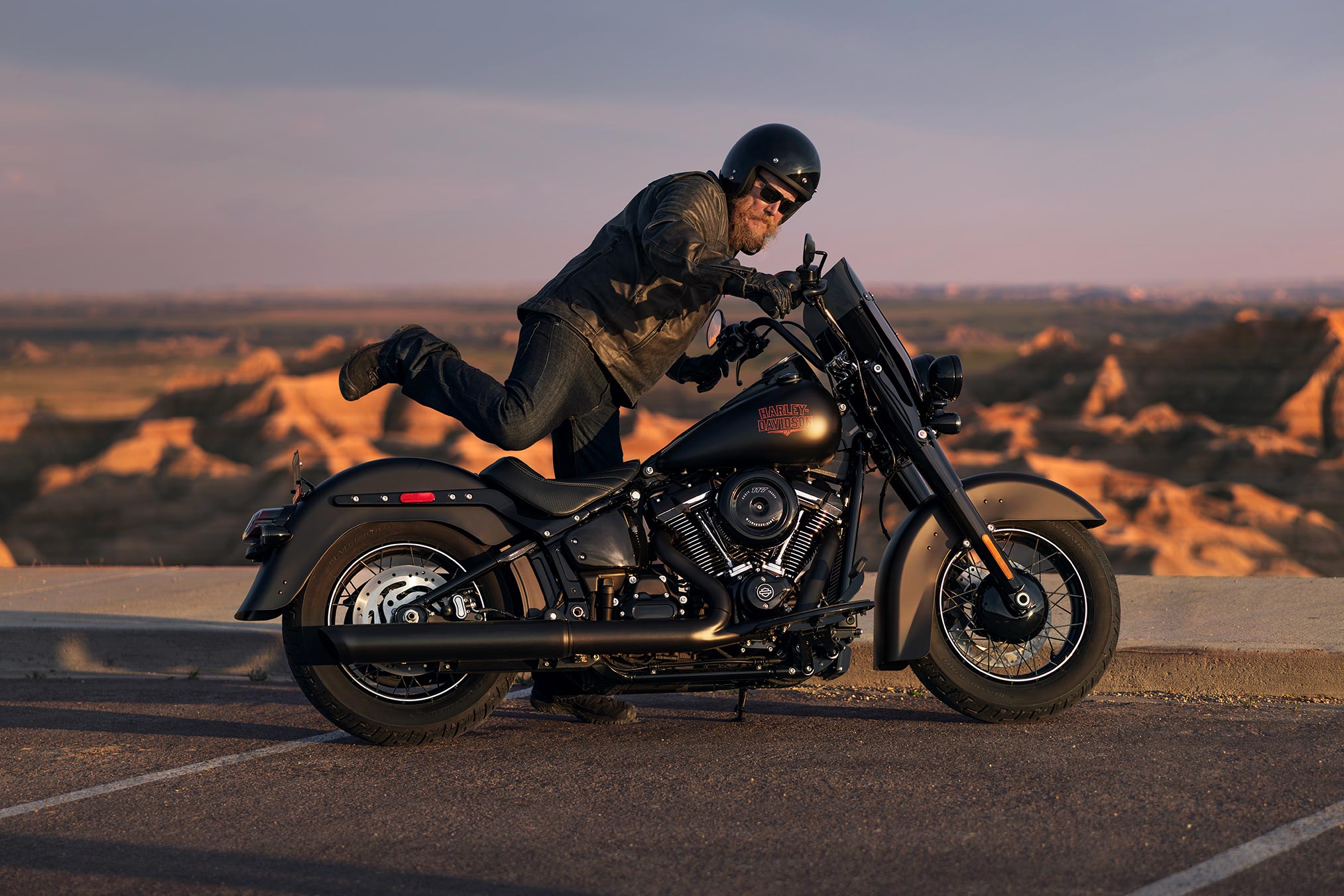
NEW HARLEY-DAVIDSON DEADWOOD MOTORCYCLE DELIVERS STRIPPED-DOWN VINTAGE STYLE
Inspired by Post-War Garage Customizers and the Spirit of the Sturgis Rally
Harley-Davidson today rolls out the new black sheep of its Cruiser portfolio with the introduction of the Deadwood model, a motorcycle that taps into the raw, stripped-down look popular with many riders immediately following World War II. The new Deadwood motorcycle celebrates this era with a rugged persona that evokes the spirit of the solo rider. The 2026 Deadwood model is available only in the United States and Canada with an MSRP of $17,999* (U.S.). Arriving soon at authorized Harley-Davidson dealerships, the Deadwood model will make its public debut August 7 at the Harley-Davidson event headquarter activation during the Sturgis Motorcycle Rally in Sturgis, S.D.
Stripped For Performance
The generation of post-World War II riders often chose to strip their bikes of non-essential trim and components in an effort to boost performance and simplify the ride. Riding together to rallies was a way to recapture the unity they embraced in the military, and one of the most popular was the Black Hills Motor Classic centered in Sturgis, S.D. In 1947, more than 400 riders converged on Sturgis to tour the spectacular winding roads of the Black Hills region and visit the communities of Spearfish, Lead and Deadwood.
“The Deadwood motorcycle embodies that spirit of rebellion and individualism that was so prevalent following World War II, when many returning GI rode a Harley-Davidson motorcycle to experience excitement and freedom,” said Bjorn Shuster, Harley-Davidson Head of Design. “At that time, very few vehicles could match the thrilling performance of a stripped-down war-surplus Harley-Davidson. As designers, we find this era of customization and personalization, the early origins of the bobber-style custom, to be very inspirational. Our second key source of inspiration lies directly in the name Deadwood, a place linked to both the Sturgis Rally and to its own rebellious history. The graphic design for the tank art evokes a Western visual language which personifies that location.”
Inspired by this era of garage-built self-expression, the 2026 Deadwood motorcycle is stripped of ornamental trim and bright finishes. The powertrain, exhaust, rear fender struts, handlebar and riser, hand and foot controls, fork covers and front end, signals and headlamp bucket are all finished in deep black. To highlight the V shape of the powertrain only the lower rocker covers and pushrod tubes are chrome plated. Denim Black paint covers fuel tank and front and rear fenders. The five-gallon teardrop fuel tank is topped with a black console holding a five-inch diameter instrument.
Laced wheels with black rims reinforce the period styling. A tuck-and-roll solo seat with a laden seat height of 25.5 inches exposes the rear fender giving the Deadwood motorcycle one of the lowest seat heights of any 2026 Harley-Davidson model. The Deadwood model is not equipped with saddlebags, revealing the rear portion of a Harley-Davidson Softail chassis designed to mimic the clean lines of a vintage hardtail frame. Lowered rear suspension and a chopped detachable windshield give the Deadwood model a slightly slammed profile.
The Deadwood model is powered by a Milwaukee-Eight 117 Classic V-Twin engine tuned to emphasize ease in rideability with a flat torque curve to deliver satisfying street performance.
Milwaukee-Eight 117 Classic Engine Performance
Displacement: 117 cubic inches (1923cc) Bore x Stroke: 4.075″ x 4.50″
Compression Ratio: 10.3:1 Fuel Octane Recommendation: 91
Peak Torque: 120 lb. ft. (163 Nm) Peak Horsepower: 98 hp (73 kW)
The 2-into-1 exhaust enhances engine tuning by promoting efficient scavenging of exhaust from the engine cylinders. The single muffler features lightweight advanced acoustic material to maximize flow while it delivers a satisfying low rumble at idle and powerful exhaust note under acceleration. The Milwaukee-Eight 117 powertrain offers significant performance potential with the installation of Screamin’ Eagle Stage Kits and Screamin’ Eagle intake and exhaust components available from Harley-Davidson Genuine Motor Parts & Accessories.
Vintage Looks, Modern Technology
While the Deadwood model is dripping with vintage style, it features a full complement of Harley-Davidson technology. Rider Safety Enhancements by Harley-Davidson are designed to enhance rider confidence during unexpected situations or adverse road conditions. The Deadwood model is equipped with following elements of Rider Safety Enhancements by Harley-Davidson:
- Straight Line/Cornering Antilock Braking System (ABS/C-ABS)
- Straight Line/Cornering Traction Control System (TCS/C-TCS)
- Straight Line/Cornering Drag Torque Slip Control (DSCS/C-DSCS)
- Tire Pressure Monitoring (TPMS)
Selectable ride modes electronically control the performance characteristics of the motorcycle and the level of technology intervention. The rider may use the hand control Mode button to change the active ride mode while riding the motorcycle or when stopped. The Deadwood model is equipped with the following Ride Modes:
- Road Mode: Intended for daily use, Road Mode delivers balanced performance.
- Sport Mode: Classic Sport Mode features a flat and smooth torque curve with greater low- and high-speed torque that pulls hard in all gears and any speed, making it comfortable, forgiving, and easy to ride for days on end.
- Rain Mode: This mode is designed to give the rider greater confidence when riding in the rain or when traction is otherwise limited.
All-LED lighting is designed to deliver style, outstanding lighting performance and conspicuity to other motorists. The Deadwood model features a seven-inch headlamp with signature ring, auxiliary fog lamps and combination stop/tail/turn rear lighting.
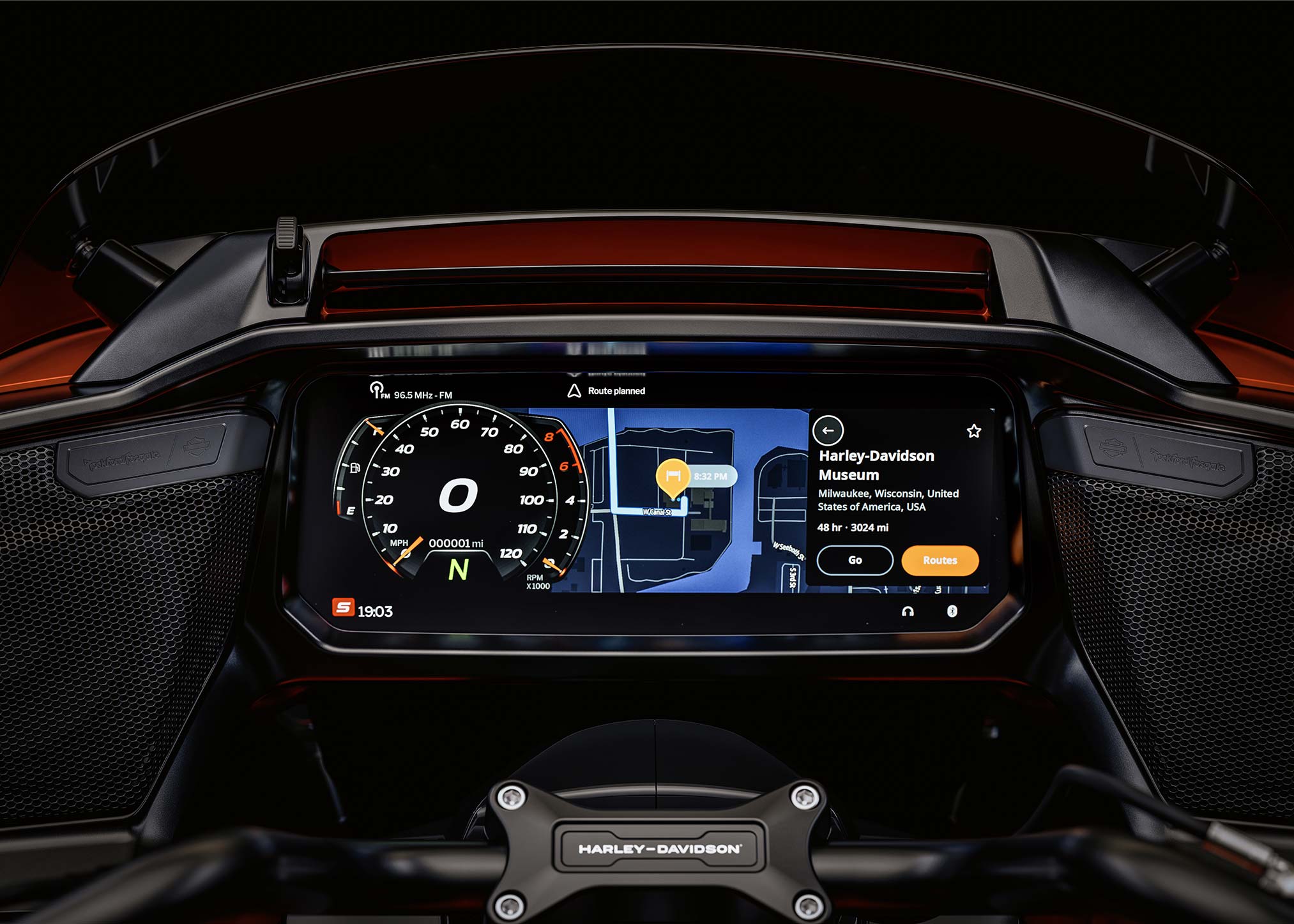
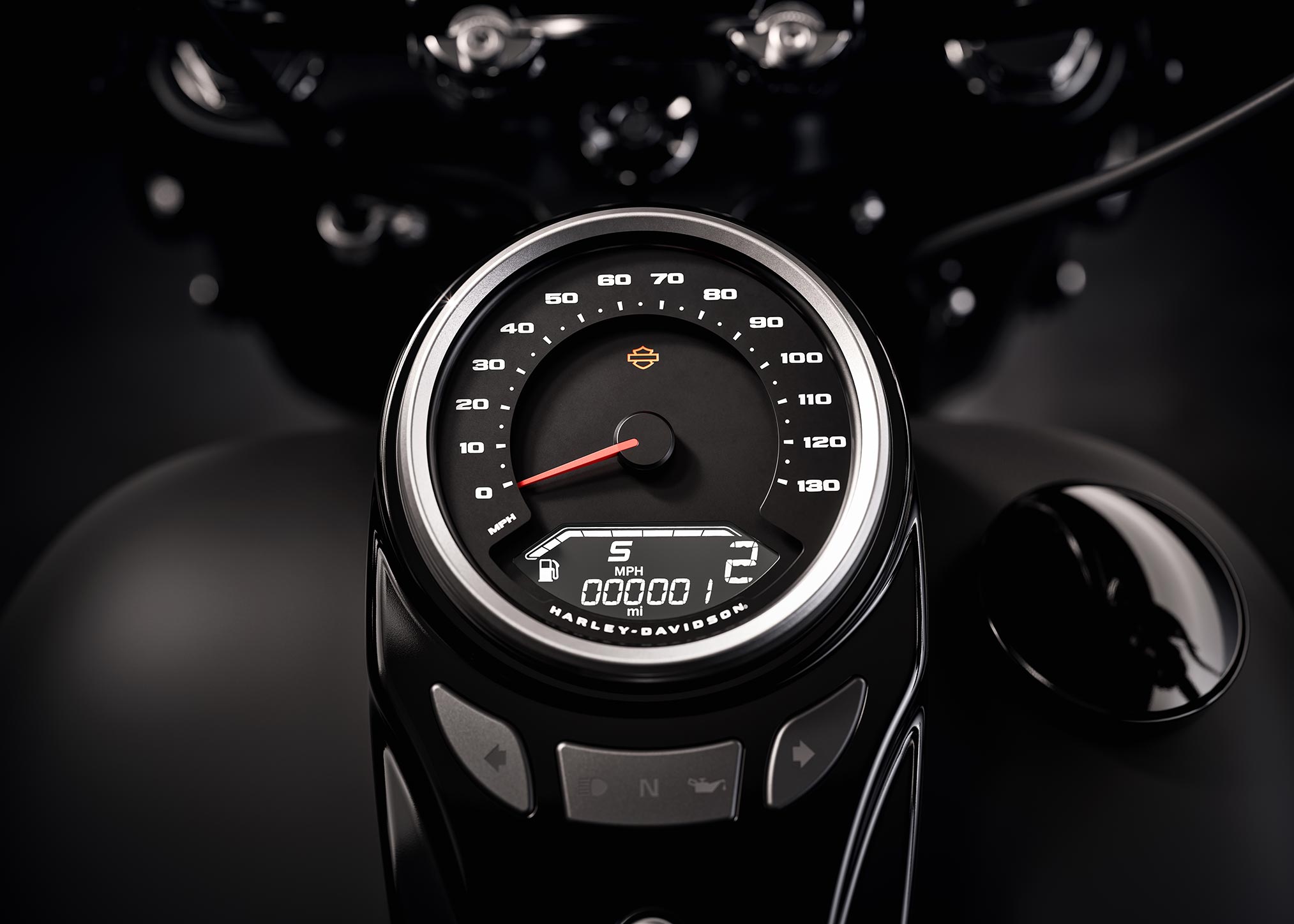
The five-inch diameter console-mounted instrument presents an analog speedometer display above a multi-function LCD digital display. The Deadwood rider can use the Trip hand control button to scroll through available information in the LCD display. Two heated gear connectors are located on the top of the rear fender below the seat for easy access. A USB-C charging port is located at the front-left side of the motorcycle.
The Harley-Davidson Softail chassis hides the rear suspension below the seat to maintain the classic look of a vintage hardtail frame while offering a thoroughly modern ride. A rear monoshock with under-seat hydraulic pre-load adjustment allows the rider to maintain optimal suspension performance for the prevailing load and road conditions. Rear suspension travel is 3.4 inches. Dual-bending valve 49 mm forks keep the front wheel in contact with the road surface for confident handling. Sure braking performance is provided by a single front disc brake with 300mm rotor and single rear brake with 292mm rotor. Tubeless laced wheels with cast aluminum rims enable Tire Pressure Monitoring (TPMS). Dunlop Harley-Davidson Series tires (Front 100/90B19, Rear 150/80B16) enhance ride and handling performance.
*Available only from dealers in the United States and Canada. Prices listed are the Manufacturer’s Suggested Retail Prices for base models. Prices exclude tax, title, licensing, registration fees, destination charges, surcharges (attributable to raw materials costs in the product supply chain), added accessories, and additional dealer charges, if any, and are subject to change. Harley-Davidson reimburses dealers for performing manufacturer-specified pre-delivery inspection and setup tasks. Dealer prices may vary.
Michael Le Pard (“Mr. Totalmotorcycle”) is the Founder of Total Motorcycle, the world’s largest motorcycle information site, trusted by over 430 million riders since 1999. With over 34 years of experience in motorcycles, gear and rider culture, he has built a global community dedicated to empowering and inspiring motorcyclists.
Total Motorcycle remains his passion project. Combining expert research, hands‑on knowledge and a commitment to helping riders make informed decisions about bikes, gear and safety worldwide.