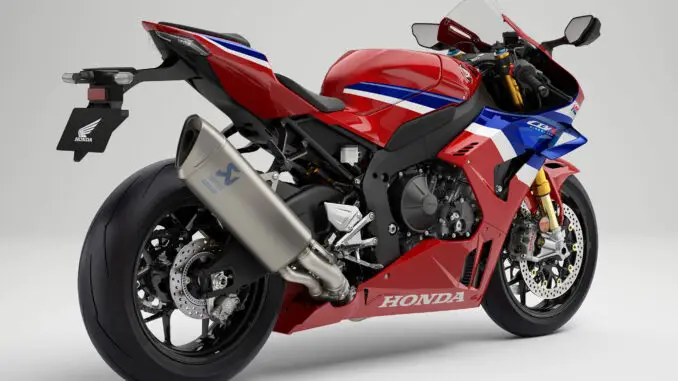
Meet the ultimate street-legal racing machine. Born from MotoGP and proven by JD Beach’s MotoAmerica Stock 1000 wins, the CBR1000RR-R Fireblade SP brings a razor-responsive inline-four engine, Öhlins NPX smart suspension, Brembo brakes, and downforce-making aero to a road or track near you. Are you ready to nail every apex and own every straight?
Review – Key Features – Features & Benefits – Specifications
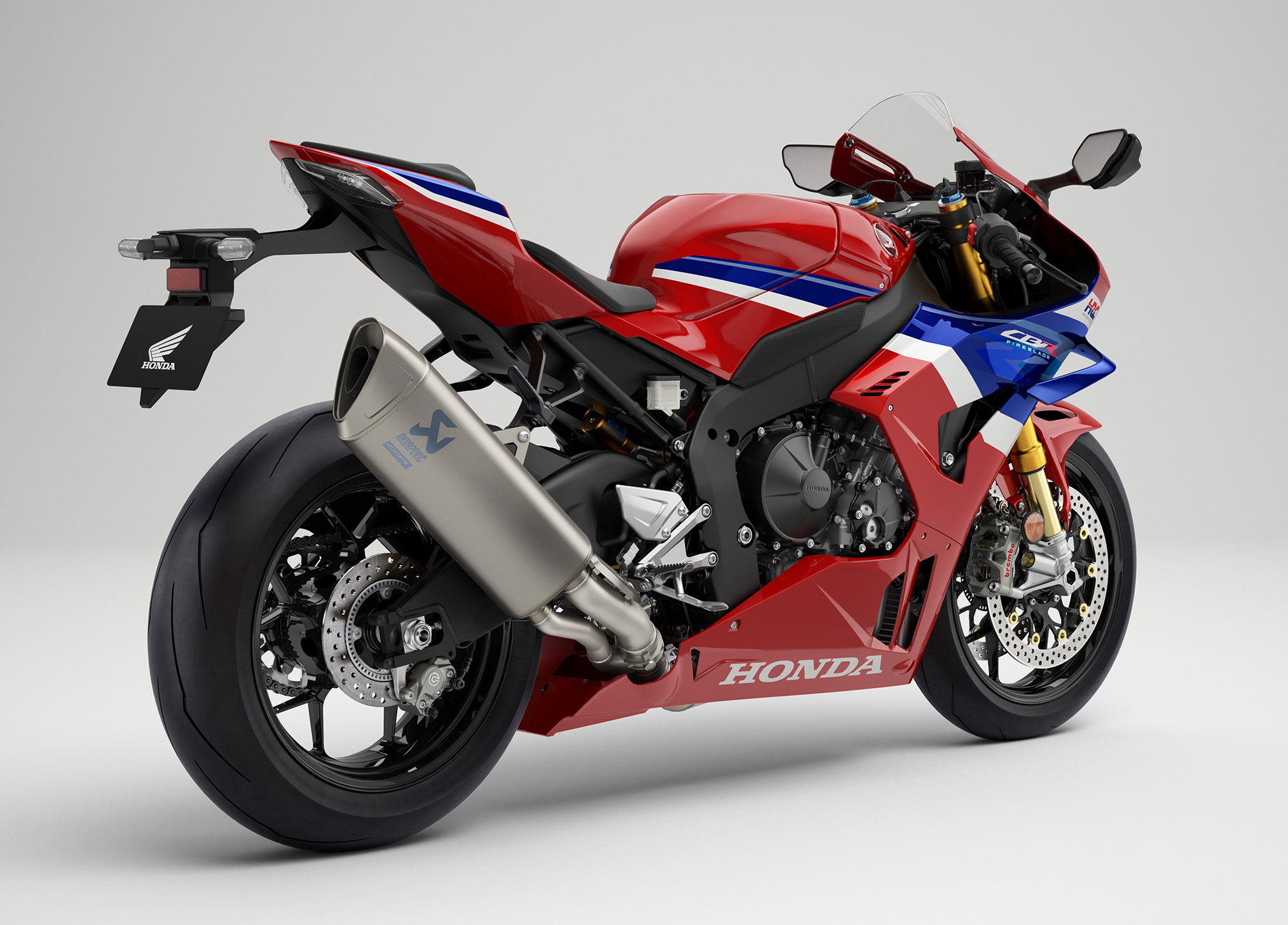
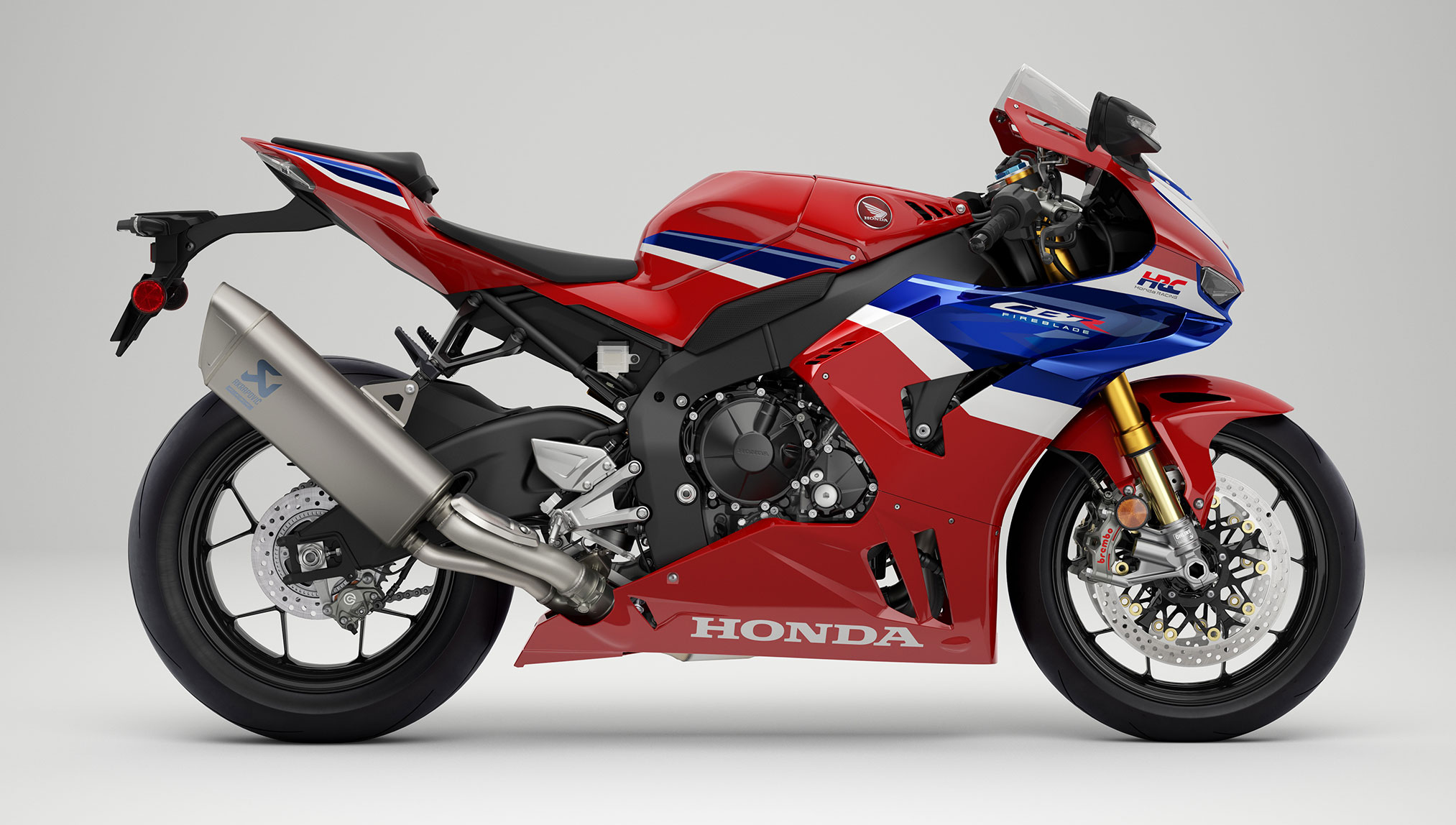
2026 Honda CBR1000RR-R Fireblade SP: BORN TO RACE.
Introducing the 2026 Honda CBR1000RR-R Fireblade SP…
For riders who see every corner, straightaway and braking zone as an opportunity to push the limits of precision, the CBR1000RR-R Fireblade SP delivers excellence. Drawing directly from HRC’s MotoGP development program, this flagship supersport model represents the purest expression of Honda’s racing DNA brought to the street. Every component—from the aerodynamics to the advanced electronics—serves a singular purpose: delivering uncompromising performance and absolute control. When success is measured in hundredths of a second, the Fireblade SP is not just a motorcycle—it’s a statement of intent.
Built for lap records. Licensed for real life.
Meet the ultimate street-legal racing machine. Born from MotoGP and proven by JD Beach’s MotoAmerica Stock 1000 wins, the CBR1000RR-R Fireblade SP brings a razor-responsive inline-four engine, Öhlins NPX smart suspension, Brembo brakes, and downforce-making aero to a road or track near you. Are you ready to nail every apex and own every straight?
Since its introduction in 1992, Honda’s iconic Fireblade has evolved into an incredible 1000cc sports motorcycle, considered the top sportsbike in our lineup. It leans on the engine and chassis technology of the RC213V-S ‘street-legal MotoGP machine’, with aerodynamics drawn from the RC213V MotoGP bike. The Fireblade is designed for pure, outright track performance.
This is why we race. Why we’ve always raced, and it is feedback from HRC and our riders that’s produced the new CBR1000RR-R Fireblade. It’s got more mid-range power from intake and cylinder head upgrades, with revised gearbox ratios for incredible drive out of corners. We’ve maintained peak power, with improved response from Two Motor Throttle By Wire control that makes every rpm count and puts pinpoint throttle precision in your right hand. Weight savings and a finely rebalanced chassis rigidity boost handling and grip feel. Updated fairing winglets maintain downforce with less steering effort at speed and, whether you’re running through bends on a winding road or hitting apexes lap after lap, the new riding position opens up total freedom of control. Made to race? No, born to race.
2026 Honda CBR1000RR-R Fireblade SP Totalmotorcycle.com Key Features
- 1000cc liquid-cooled inline four-cylinder engine
- Dual-Stage Fuel Injection (DSFI)
- Ohlins smart suspension
- Brembo brakes
- Aerodynamic winglets
Engine & Drivetrain
MotoGP™ DNA
The CBR1000RR-R Fireblade SP has been created from the ground up with heavy input from the HRC MotoGP™ development program. Engine and chassis technology lean heavily on that of the RC213V-S ‘Street legal MotoGP™ machine’, with aerodynamics drawn from the RC213V MotoGP™ bike. Power delivery, handling and aerodynamics are all targeted toward outright track performance.
Cutting Edge Performance
To make an amazing sport motorcycle even better, Honda engineers looked at every component in the inline-four engine with the aim of squeezing out a little more performance here, a little better rider control there, and a little less weight overall. We believe this is the best Fireblade we’ve ever made.
Valvetrain Upgrades
More torque at low revs means better drive out of corners, so our engineers focused on the shape of the piston and connecting rod, while optimizing valve timing to help prioritize combustion consistency and thereby exhaust efficiency at lower revs. The bridged-box design of the piston uses a reinforcing structure between the skirt and the wrist-pin bosses that helps enable a high redline. Big torque down low, huge power up top. A winning formula.
Twin DSFI Motors
For ultimate control of the intake charge, the Dual Stage Fuel Injection system now employs two motors to open and close the throttle-body valves. One motor controls the intakes for cylinders 1 and 2, the other controls the intakes for cylinders 3 and 4. This allows finer control of the fuel-injection system, and thereby smoother transition between acceleration and deceleration. In other words, a more rider-friendly powerband.
Reduced Weight – Better Response
Even while boosting power, engineers still managed to reduce the weight of the RR-R SP’s engine. A new crankshaft shaves 450 grams while also reducing inertial mass by 8.8%, and the connecting rods and crankcase have also dropped weight. Less weight in reciprocating components allows revs to build faster and throttle response to be quicker.
Reduced Friction
To help reduce internal friction and improve durability, the cam lobes are coated in Diamond Like Carbon (DLC) – similar to the RC213V-S. The cylinders also feature a built-in bottom bypass that circulates cool water from the radiator into the main water jacket, while the area below uses non-cooled water. The outcome is a lower, more even temperature at all points across the cylinder bores for less distortion and friction.
Ram-Air Induction
A ram-air duct located in the front fairing tip feeds through the headstock, around the steering stem and into the airbox. The opening area of this system is equivalent to that of the RC213V MotoGP™ machine and its design provides high ram pressure in a stable manner at a wide range of speeds.
Akrapovic Exhaust
The 4-2-1 exhaust downpipes have optimized diameters and oval cross section to improve gas flow. The smaller, lightweight titanium exhaust muffler was developed in conjunction with Akrapovic, to help deliver both low-RPM torque and high-RPM power; a valve stopper helps stop exhaust-gas leak when closed while also reducing noise, allowing the mufflers total internal volume to be reduced by 38%.
Throttle By Wire
Throttle By Wire (TBW) ensures fast response through a range of part-throttle applications – such as gradual opening as you exit a corner – thereby minimizing any delay in torque delivery. It’s derived from the RC213V-S to provide more linear delivery and puts precise throttle control – and a natural feel – in a rider’s right hand.
Riding Modes
Three default riding modes feature options to change the engine’s output and character. Power (P), Engine Brake (EB) and Wheelie (W) control can all be adjusted within the modes. The RR-R SP is also equipped with Start Mode for optimum race starts — It limits engine revs at 6,000, 7,000, 8,000 or 9,000 RPM set-points even with a wide-open throttle, helping you focus on clutch release (and lights) alone. As well, a quickshifter is fitted as standard, with performance optimized for racing and reliability.
Wheelie Control
Wheelie control uses information gathered by the IMU on pitch angle, along with front and rear wheel speed sensors to maintain torque and manage any front wheel lift without sacrificing forward drive.
Honda Selectable Torque Control
Honda Selectable Torque Control (HSTC) adjusts through nine levels and off. HSTC has been optimized for the RR-R SP and adds slip-rate control to moderate rapid wheel spin. In conjunction with the existing outright slip control, HSTC is smooth in operation while helping deliver added rider confidence.
Chassis & Suspension
Öhlins Suspension
In 2025, the RR-R SP raised the bar again with an upgraded third-generation Öhlins Electronically Controlled (Smart-EC) suspension system. The 43 mm NPX fork and TTX36 rear shock work seamlessly with the Öhlins Object Based Tuning interface (OBTi) to provide unmatched precision and control.
Lighter Frame
With the newest version, Honda took the RR-R SP’s performance even further with a lighter, more responsive chassis. The aluminum diamond frame sheds 1.1 kg and features precisely tuned rigidity for sharper feedback in every corner. The frame’s design, using the rear of the engine as the upper shock mount, is complemented by an RC213V-S–inspired swingarm.
Honda Electronic Steering Damper
To improve stability over rough roads and at higher speeds, the RR-R SP comes equipped with Showa’s new Honda Electronic Steering Damper (HESD). Its lightweight through-rod design mounts on the bottom of the steering stem and attaches to the bottom yoke, and is controlled by input from the wheel-speed sensors and IMU with 3 levels of control available.
Brembo Brakes
The RR-R SP features Brembo Stylema R four-piston radial-mount brake calipers, paired with a Brembo master cylinder and brake lever. Large 330 mm discs with 5 mm thickness ensure excellent heat dissipation even under intense, repeated braking. The rear brake caliper is the same high-performance Brembo unit used on the RC213V-S.
ABS With Lift Control
The RR-R SP’s ABS system with rear lift control includes two switchable modes: Road mode modulates braking force required for typical road riding, while Track mode is programmed to accommodate higher circuit speeds.
Additional Features
Improved Aerodynamics
The RR-R SP’s aggressive fairing design is no mere styling exercise. The goal in development was to create a class-leading drag coefficient and restrict lift under acceleration while improving braking stability. To help generate downforce at track speeds – and maintain the smallest possible frontal area – the fairing employs winglet structures that effectively generate the same downforce as the RC213V MotoGP machine. This results in a reduction in wheelies under acceleration and increased stability during braking and corner entry.
More Mode Options
A full-colour 5-inch TFT display that’s fully customizable offers intuitive control, operated via a four-way switch on the left handlebar. You can choose to display the information you want in a format you prefer, including engine temperature, riding modes, speedometer and tachometer, shifter setting, ABS level, gear position, remaining fuel, and much more.
Honda Smart Key System
Thanks to the Honda Smart Key System, the ignition and handlebar lock operate without having to insert a key. In addition to being convenient in day-to-day use, the design also allowed for the use of a competition-style top yoke and freed up space for the ram-air system.
LED Lighting
The RR-R SP lights the way with bright LED headlights and taillights, plus LED turn signals.
HISTORY
The CBR1000RR-R Fireblade SP descends from the racing pedigree that has played a key role in the advancement of the sport bike genre. The bloodline starts with the 1959 Honda CB92 Benly Super Sport, a race-worthy performance model that competed at the highest levels on the track while being equally at home when ridden on the road, establishing a protocol that Honda sport bikes have championed ever since. The steadfast pursuit of technological improvement while competing on the World Championship stage cultivated a number of seminal models in the successive decades, including the groundbreaking 1969 CB750, which introduced the world’s first modern inline four-cylinder sport bike engine—an architecture quickly imitated by the competition.
The pace-setting development progressed as the CBR family continued to shift the paradigm. In the 1990s, the CBR400RR (a Japanese-market model) and CBR900RR ushered in the concept of “Total Control,” an ideal blend of harmonious engine performance, light weight and nimble handling that dramatically enhances the connection between rider and machine. Introduced to the U.S. market in 2004, the CBR1000RR continued to refine this well-proven theory by incorporating lessons learned from Honda’s MotoGP championship-winning RC models on racing circuits around the globe. The model has continuously raised the bar in the 1000cc sport bike category.
Drawing heavily from Honda’s dominant RCV MotoGP platform, the 2021 CBR1000RR-R Fireblade SP reset the bar again, focusing on outright track performance. Engineers developed an engine that was more compact and benefited from the use of high-end technologies like titanium connecting rods, forged-aluminum pistons and finger-follower rocker arms.
For the 2022 model year, the CBR1000RR-R Fireblade SP celebrated 30 years since the original CBR1000RR was offered in Europe, with detailed updates for improved corner-exit acceleration, HSTC management and throttle feel. In 2025, the CBR1000RR-R Fireblade SP once again drove further up its development curve. Updates delivered a healthy performance boost, thanks to improved throttle response, riding-position changes and upgrades from Brembo and Öhlins, with the aim of producing a bike that’s ready to win out-of-the-box, but also one with an elevated riding experience on the open road.
Honda Expands E-Clutch Lineup With New CB750 Hornet, Announces 15 Total On-Road Models
- E-Clutch enables shifting with or without the clutch lever
- Four models now offered with the innovative technology
- New more competitive pricing, including reduced MSRPs on six models
Honda today announced 15 on-road motorcycle models for 2026, highlighted by the expansion of the company’s groundbreaking E-Clutch technology to the popular CB750 Hornet naked bike. With this move, Honda now offers a total of four E-Clutch-equipped motorcycles—including the CB650R, CBR650R and the recently announced Rebel 300 E-Clutch cruiser—underscoring the brand’s commitment to combining innovation with rider accessibility and control.
This latest new-model announcement encompasses a full range of categories—from adventure and sport to touring and standard—demonstrating the company’s continued leadership and breadth in the motorcycle market. Also of note is a renewed focus on the sport bike segment, with MSRP reductions introduced to improve value and competitiveness while maintaining the same Honda quality and performance. MSRP reductions include $1,000 on the CB500 Hornet and CBR500R, $700 on the CB650R E-Clutch and CBR650R E-Clutch and $650 on the CB300R. In addition, the NX500 gets a $500 price reduction.
“Honda’s E-Clutch system represents a major step forward in motorcycle technology, offering riders the freedom to enjoy seamless shifting without sacrificing engagement or performance,” said Colin Miller, Manager of Public Relations at American Honda. “Expanding this technology to the CB750 Hornet for 2026—and offering an extensive lineup of fun, practical, value-conscious on-road models—reflects our ongoing goal of making the joy of motorcycling more approachable, intuitive and enjoyable for riders of all experience levels. On a related note, we’re pleased to confirm our commitment to sport bike customers, with new lower pricing for multiple CB and CBR models that makes them more accessible and creates a natural path for current Honda riders—like miniMOTO owners—to step up to a sport bike. Importantly, these changes come without sacrificing technology, style or performance.”
2026 Honda CBR1000RR-R Fireblade SP Totalmotorcycle.com Features and Benefits
DESIGN / STYLING
Bodywork
The aggressive fairing design is no mere styling exercise: it was developed to create a class-leading drag coefficient (with a tucked-in rider under track conditions), and to restrict lift under acceleration, while also optimizing braking stability.
The fairing midsection houses forward-set winglets, which generate downforce (to minimize wheelies under acceleration, and to enhance stability on braking and corner entry) with an aerodynamic frontal step. The design reduces yaw moment through a corner by 10%, making high-speed turning easier.
To reduce steering effort, a convex surface on each side of the front fender moves airflow away from the front wheel, smoothly directing it to the fairing sides. Cooling air for the radiator and oil cooler is optimized by aerodynamic management of both velocity and pressure of air flowing from the front tire.
The lower fairing extends close to the rear tire and features an aerodynamic step to minimize airflow around the tire, optimizing handling.
To let air flow around the rider’s feet with minimum resistance, the sides of the rear hugger are carefully shaped. To minimize rear lift, the hugger’s upper side is cut out to vent air that channels up from underneath either side of the swingarm.
The fuel-tank cover is set low, minimizing the frontal area with the rider prone. The tank is shaped to let the rider’s knee grip. At a 35° angle, the screen smoothly channels airflow from the upper fairing over the rider and seat cowl, which itself presents the minimum possible drag resistance.
Meter / Controls
Providing full, intuitive control of the CBR1000RR-R Fireblade SP’s systems is a high-resolution, full-color 5-inch TFT screen, which is fully customizable to display exactly what the rider wants to see. The compact lefthand switchgear houses a four-way switch; fast and easy to use, it has top/bottom buttons to set riding-mode parameters, while the left/right buttons cycle screen-display information.
To protect the engine on cold starts, a function moves the redline down to 8,000 rpm on startup; as the coolant temperature reaches its operating zone, the redline moves up to just over 14,000 rpm.
Honda’s Smart Key System operates the ignition and the handlebar lock, with no need to insert a key. This feature is convenient during day-to-day use, and it allows use of a competition-style top triple clamp, with optimum space for the ram-air system.
ENGINE / DRIVETRAIN
The Fireblade’s 999.9cc, inline DOHC four-cylinder semi-cam-gear engine was designed with heavy input from the HRC MotoGP development program. The engine shares the oversquare 81.0mm bore and 48.5mm stroke as the RC213V, and the compression ratio is 13.6:1.
MotoGP technology is everywhere internally. Friction is minimized via Diamond Like Carbon (DLC) on the cam lobes, as with the RC213V-S MotoGP replica; this advanced process achieves a reduction in valvetrain frictional loss of 35% compared to non DLC-coated lobes.
Connecting rods and connecting-rod caps forged from TI-64A Titanium (a material developed by Honda) reduce weight by 50% compared to the previous Chromium Molybdenum steel versions; they employ bolts made from HB 149 Chromium Molybdenum Vanadium steel (again a Honda development) and do not use fastening nuts.
For durability, the small-end bushings are made of shaved C1720-HT Beryllium copper (because of its high-rpm reliability), while the surfaces of the big-ends are treated with DLC. The pistons are forged aluminum for lightweight strength, durability and maximum output.
To guarantee high-rpm wear resistance, the piston skirts feature an Ober coating (Teflon and Molybdenum base) and nickel-phosphorous plating for the piston-pin clip-groove. Managing temperature, the pistons use a multi-point piston jet that sprays cooling oil in multiple directions through each cycle. At low rpm (i.e., when the jets are not needed), check balls shut off the flow of oil to limit oil-pressure loss and minimize friction.
To minimize bore distortion (and thus friction), the cylinder features a built-in bottom bypass. This system circulates cool water from the radiator into the main water jacket, while the area below uses non-cooled water. The net effect is a low, even temperature at all points across the bores.
To minimize width, the engine is started by rotation of the clutch main shaft rather than the crankshaft. This design allows a compact crankshaft, while space is saved through double use of the primary driven gear to also transmit rotation from the starter motor; the engine is compact in length, with short distances between the crankshaft, countershaft and main shafts. The rear of the engine block also serves as the upper shock mount.
Valvetrain
The inlet valves are 32.5mm diameter, with 28.5mm exhaust, and they’re operated by finger-follower rocker arms; valve angle on the intake side is 9°, minimizing the surface area of the combustion chamber and enhancing combustion efficiency. There are three-stage elliptical progressive valve springs for both inlet and exhaust.
The valve train uses a semi-cam gear-train system. To drive such high-rpm/high-cam lift performance, the chain is driven from the timing gear located on the crankshaft via the cam-idle gear; allowing for a relatively short chain length.
Intake System
Air is fed into the engine via a ram-air duct located at the high-surface pressure tip of the front fairing; the size of its aperture is equivalent to that of the RC213V MotoGP machine. A ribbed “turbulator” to the right, left and above the duct entrance ensures maximum induction of moving air, with minimal impact on handling. The draft angle of the aperture’s interior wall maintains flow under high speed and acceleration.
To maintain stable performance across a wide speed range, pressurized air follows a straight shot through the headstock, around the steering stem and into the airbox. This smooth path is made possible by Honda’s Smart Key system and a 25º steering angle. To draw the volume of air needed, the throttle bodies have 52mm diameters.
The “dirty” side of the air filter controls the direction of intake air separation and vortex generation, while on the “clean” side, filtered air feeds slash-cut intake funnels.
Exhaust System
Mirroring the intake side, the four exhaust downpipes use an oval cross section. Constructed from titanium, the Akrapovič muffler’s small physical size and light weight contribute to mass centralization and an aggressive right-side lean angle. The exhaust valve was designed to deliver both low-rpm torque and high-rpm power, and the exhaust note rises linearly with engine rpm.
ELECTRONIC CONTROLS
Derived and developed from the system used by the RC213V-S, the Fireblade’s throttle-by-wire system (TBW) controls the throttle-butterfly valve angle (relative to input from the throttle) to provide a linear delivery, allowing precise throttle control and a natural feel. The TBW is a two-motor system: one motor for cylinders 1 and 2, the other for 3 and 4. Through smaller throttle openings, the throttle valves for cylinders 1 and 2 open first, to finely adjust output and generate crank-rotation fluctuations. This makes the engine much easier to control through the lower rpm ranges, and as revs climb, all throttle valves open together, for a smooth rush of top-end power.
The other benefit of two-motor TBW is the amplification of engine braking; with the throttle fully closed during deceleration, cylinders 3 and 4 open with the exhaust valve closed, to increase the engine’s pumping loss (and therefore also engine braking); meanwhile, cylinders 1 and 2 remain closed, ready to open smoothly on the next acceleration.
A Bosch six-axis inertial measurement unit (IMU) delivers accurate calculation of pitch and roll, for precise control of the bike’s behavior. The Fireblade SP is also equipped with Showa’s Honda Electronic Steering Damper (HESD), which has a lightweight, through-rod design and mounts on the bottom of the steering stem and attaches to the bottom triple clamp. HESD is controlled by input from the wheel-speed sensors and IMU; three levels of control are available.
Riding Modes
There are three default riding modes, with options to change engine output and character. Power (P) operates through levels 1-5, with 1 giving ultimate outright power. Engine Brake (EB) manages performance on a closed throttle through levels 1-3, with 1 being the strongest engine braking delivered by the two-motor TBW. Wheelie (W) manages through levels 1-3 (plus off), with 1 giving the weakest intervention.
Wheelie Control uses information gathered by the IMU on the motorcycle’s pitch angle, along with front and rear wheel-speed sensors to maintain torque and manage the wheelie without sacrificing forward drive.
The Fireblade is also equipped with Start Mode for race starts. It limits engine rpm at certain set points (6,000 rpm, 7,000 rpm, 8,000 rpm and 9,000 rpm), even with a wide-open throttle, letting the rider focus on the lights and clutch release. The three-level quick shifter delivers razor-fast changes, with short fuel cut time while shifting and smooth torque pickup after shifting.
CHASSIS / SUSPENSION
Geometry
Wheelbase is 57.2 inches, with rake and trail of 24.1° and 4.0 inches (102mm), respectively. Curb weight is 445 pounds, with all required fluids and a full tank of fuel. Weight distribution is balanced at 53%/47%, and a relatively high center of gravity optimizes side-to-side agility. Seat height is 32.7 inches.
Frame
The diamond-style main frame is constructed from 2mm aluminum, with an extremely accurate tuning of the rigidity balance; the engine mounts in six locations, optimizing handling. Considerable development was focused on rigidity balance, for a supple handling feel and razor-sharp steering accuracy.
Round, thin-wall aluminum tubing forms the minimalist subframe, which mounts to the frame from the top to narrow the area around the rear of the fuel tank and seat, making for a compact, aerodynamically efficient riding position.
Swingarm
Constructed from 18 individual thicknesses of aluminum, the swingarm is 24.5 inches long. Its horizontal and vertical rigidity are tuned to generate grip and feel.
Suspension
For optimum design integrity (and to minimize weight), the Pro-Link rear-suspension system has the top of the shock attach to the rear of the engine block via a bracket. This also isolates the rear wheel from the headstock, optimizing high-speed stability and feel for rear-wheel traction.
The CBR1000RR-R Fireblade SP features the third-generation Öhlins 43mm S-EC3.0 (SV) NPX inverted fork. Using an internal spool-valve structure, the fork optimizes ride quality and turning stability through the suspension stroke, while enhancing feel for front-tire grip. The fork is clamped by forged-aluminum top and bottom triple clamps. Matching the race-quality front end is an Öhlins TTX36 S-EC3.0 (SV) shock absorber.
In conjunction with the hardware, Öhlins Objective Based Tuning interface (OBTi) offers very fine suspension adjustments front and rear; both can be set independently from the default settings, and three individual modes can be set and stored, allowing the rider to configure multiple settings for conditions such as weather, tire wear or fuel load—and to switch instantly while riding. A front/rear spring-preload guide is accessible via the meter, which recommends the correct setting for the rider’s weight.
Wheels
The rear 17-inch five-spoke cast-aluminum rim wears a 200/55-ZR17 tire, minimizing the change in chassis geometry when switching from street to track rubber. The 17-inch front five-spoke cast-aluminum rim wears a 120/70-ZR17 tire.
Brakes
The Brembo Stylema R four-piston radial-mount brake calipers are operated by a Brembo master cylinder and brake lever, and offer consistently high braking performance, even at the high temperatures generated on track. The calipers grip 330mm diameter/5mm thick discs that dissipate heat efficiently. The rear brake caliper is the same Brembo unit used by the RC213V-S.
Rider confidence at turn-in is enhanced by rear-lift control and ABS-managed brake force relative to lean angle. The system features three switchable setups:
- STANDARD mode focuses on road-riding performance, with high brake force and less pitching.
- TRACK mode offers performance in braking from much higher circuit speeds and does not suppress rear lift.
- RACE mode switches off the rear ABS function completely, with no Cornering ABS input.
2026 Honda CBR1000RR-R Fireblade SP – Totalmotorcycle.com USA Specifications/Technical Details
US MSRP Price: $28999 USD
Canada MSRP Price: $37652 CDN (includes Freight, PDI and Fees)
Europe/UK MSRP Price: £23699 GBP (On The Road inc 20% Vat)
| ENGINE | |
| Type | 999.9cc liquid-cooled four-stroke inline four |
| Valvetrain | DOHC; four valves per cylinder |
| Bore x Stroke | 81.0mm x 48.5mm |
| Compression Ratio | 13.6:1 |
| Induction | Programmed electronic fuel injection (PGM-FI); 52mm throttle bodies |
| Ignition | Digital transistorized w/ electronic advance |
| Starter | Push-button electric starter |
| Transmission | 6-speed manual |
| Clutch | Multiplate wet |
| Final Drive | 16T/44T; #525 chain |
| SUSPENSION | |
| Front | 43mm Öhlins NPX telescopic fork w/ Smart Electronic Control (S-EC3); 4.9-inch travel |
| Rear | Pro-Link® system; single Öhlins TTX36 EC shock absorber w/ Smart Electronic Control (S-EC3); 5.6-inch travel |
| BRAKES | |
| Front | Dual Brembo Stylema four-piston radial-mount hydraulic calipers w/ 330mm discs; ABS |
| Rear | Single Brembo hydraulic caliper w/ 220mm disc; ABS |
| TIRES | |
| Front | 120/70ZR-17 |
| Rear | 200/55ZR-17 |
| MEASUREMENTS | |
| Rake | 24.1º |
| Trail | 4.0 inches (102mm) |
| Length | 82.9 inches |
| Width | 29.6 inches |
| Height | 45.0 inches |
| Seat Height | 32.7 inches |
| Ground Clearance | 5.1 inches |
| Wheelbase | 57.2 inches |
| Fuel Capacity | 4.4 gallons |
| Curb Weight* | 445 pounds |
| OTHER | |
| Color | Grand Prix Red |
| Warranty | 1 year |
2026 Honda CBR1000RR-R Fireblade SP – Totalmotorcycle.com Canada Specifications/Technical Details
| ENGINE | |
| Type | 999.9cc liquid-cooled four-stroke inline four |
| Valvetrain | DOHC; four valves per cylinder |
| Bore x Stroke | 81.0mm x 48.5mm |
| Compression Ratio | 13.6:1 |
| Induction | Programmed electronic fuel injection (PGM-FI); 52mm throttle bodies |
| Ignition | Digital transistorized w/ electronic advance |
| Starter | Push-button electric starter |
| Transmission | 6-speed manual |
| Clutch | Multiplate wet |
| Final Drive | 16T/44T; #525 chain |
| SUSPENSION | |
| Front | 43mm Öhlins NPX telescopic fork w/ Smart Electronic Control (S-EC3); 4.9-inch travel |
| Rear | Pro-Link® system; single Öhlins TTX36 EC shock absorber w/ Smart Electronic Control (S-EC3); 5.6-inch travel |
| BRAKES | |
| Front | Dual Brembo Stylema four-piston radial-mount hydraulic calipers w/ 330mm discs; ABS |
| Rear | Single Brembo hydraulic caliper w/ 220mm disc; ABS |
| TIRES | |
| Front | 120/70ZR-17 |
| Rear | 200/55ZR-17 |
| MEASUREMENTS | |
| Rake | 24.1º |
| Trail | 4.0 inches (102mm) |
| Length | 82.9 inches |
| Width | 29.6 inches |
| Height | 45.0 inches |
| Seat Height | 32.7 inches |
| Ground Clearance | 5.1 inches |
| Wheelbase | 57.2 inches |
| Fuel Capacity | 4.4 gallons |
| Curb Weight* | 445 pounds |
| OTHER | |
| Color | Grand Prix Red |
| Warranty | 1 year |
2026 Honda CBR1000RR-R Fireblade SP – Totalmotorcycle.com Europe Specifications/Technical Details
Engine
Bore × Stroke (mm)
81mm x 48.5mm
Carburation
PGM-FI
Compression Ratio
13.6:1
Engine Displacement (cc)
999.9cc
Engine Type
water-cooled, 4-stroke, DOHC, inline 4-cylinder
Max. Power Output
160kW/14,000rpm
Max. Torque
113Nm/12,000rpm
Starter
Electric
Throttle Bore
52mm
C02 Emissions (g/km)
155 g/km
Oil Capacity (Litres)
4L
Wheels
Brakes Front
330mm disc with radial-mount Brembo Stylema R 4-piston caliper
Brakes Rear
220mm disc with Brembo 2-Piston caliper
Suspension Front
Ohlins NPX S-EC3.0 43mm telescopic fork with preload, compression and rebound adjustments, 125mm stroke.
Suspension Rear
Ohlins TTX36 S-EC3.0 Pro-Link swingarm with preload, compression and rebound damping, 143mm stroke.
Tyres Front
PIRE:DIABLO SUPERCORSA SP (V3) BS:RS11
Tyre Size Front
120/70-ZR17
Tyre Size Rear
200/55-ZR17
Tyres Rear
PIRE:DIABLO SUPERCORSA SP (V3) BS:RS11
Wheels Front
17inch 3.5
Wheels Rear
17inch 6.0
Dimensions and Weights
Battery Capacity (VAh)
12V-2Ah HY85S Li-ion
Caster Angle
24°
Dimensions (L×W×H) (mm)
2,100mm x 745mm x 1,140mm
Frame type
AL TWIN-TUBE
Fuel Tank Capacity (Litres)
16.5L
Fuel Consumption
14.9km/L (6.7L/100km)
Ground Clearance (mm)
115mm
Kerb Weight (kg)
201kg
Seat Height (mm)
830mm
Trail (mm)
102mm
Wheelbase (mm)
1455mm
Noise Level
77dB
Transmission
Clutch
Wet, multiplate hydraulic clutch
Clutch Operation
Cable
Final Drive
Chain
Gearbox
6-speed
Transmission Type
Manual Transmission
Quick Shifter
Yes
Instruments and Electrics
Headlights
LED
12v Socket
Optional (USB)
Ignition System
Electronic, digital transistor
Instruments
TFT full color
Tail Light
LED
USB Socket
Optional
Security
Smart Key
Key Features
Engine
1000cc DOHC Inline Four-Cylinder Engine
Throttle by Wire
Unique Separate Control Two Motor Throttle By Wire
Winglets
New Winglet Aerodynamics
Inertial Measurement Unit
6-Axis Inertial Measurement Unit
Swingarm
RC213V-S Derived Aluminium Swingarm
Exhaust
Akrapovič Titanium Muffler
Manufacturer Specifications and appearance are subject to change without prior notice on Total Motorcycle (TMW).