

You are here: Home — New 2006 Models — 2006 Ducati Motorcycle Models
2006 Ducati ST3S ABS
Back to 2006 Ducati Motorcycle Index Page
Click photos to enlarge.
They make great desktop images.
2006 Ducati ST3S ABS
2006 Ducati ST3S ABS
2006 Ducati ST3S ABS
2006 Ducati ST3S ABS
2006 Ducati ST3S ABS
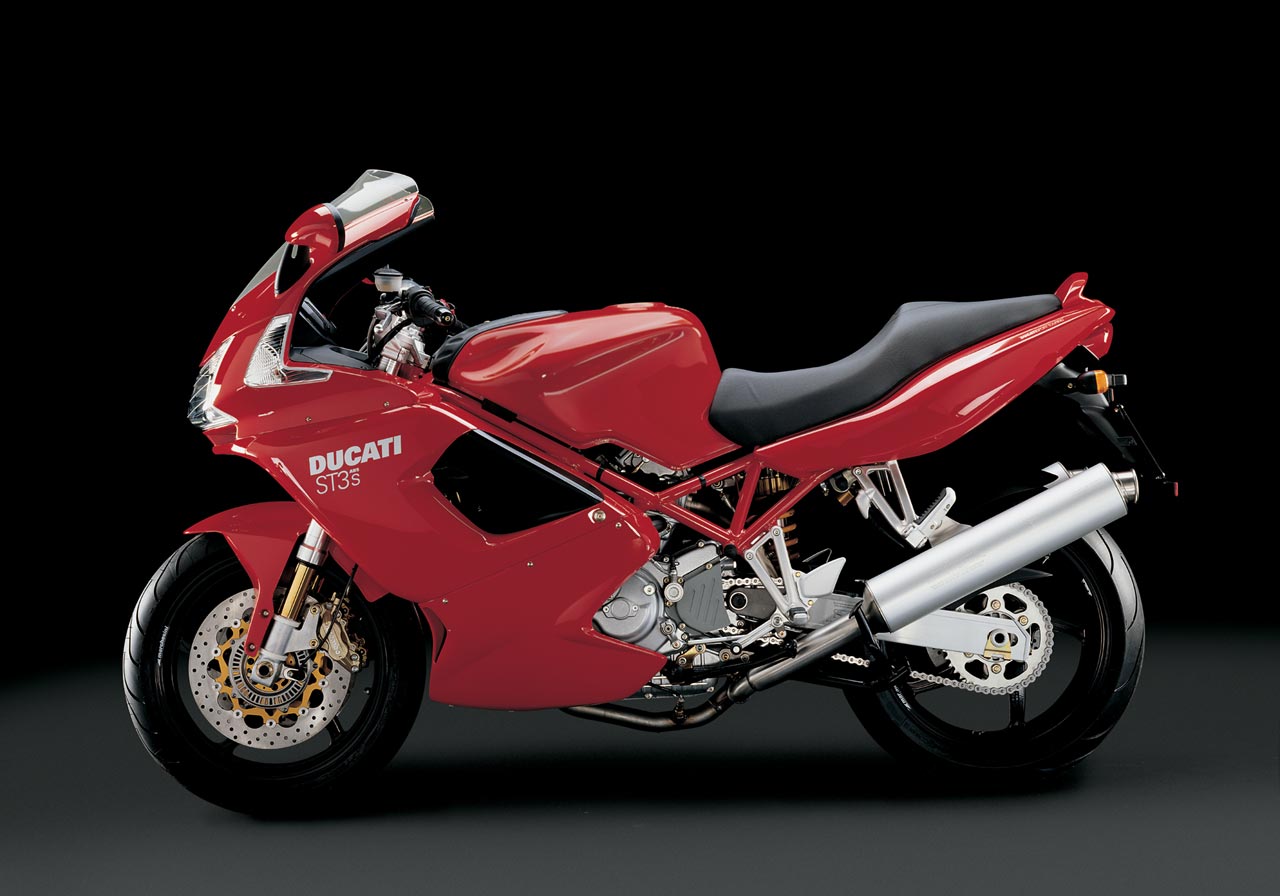
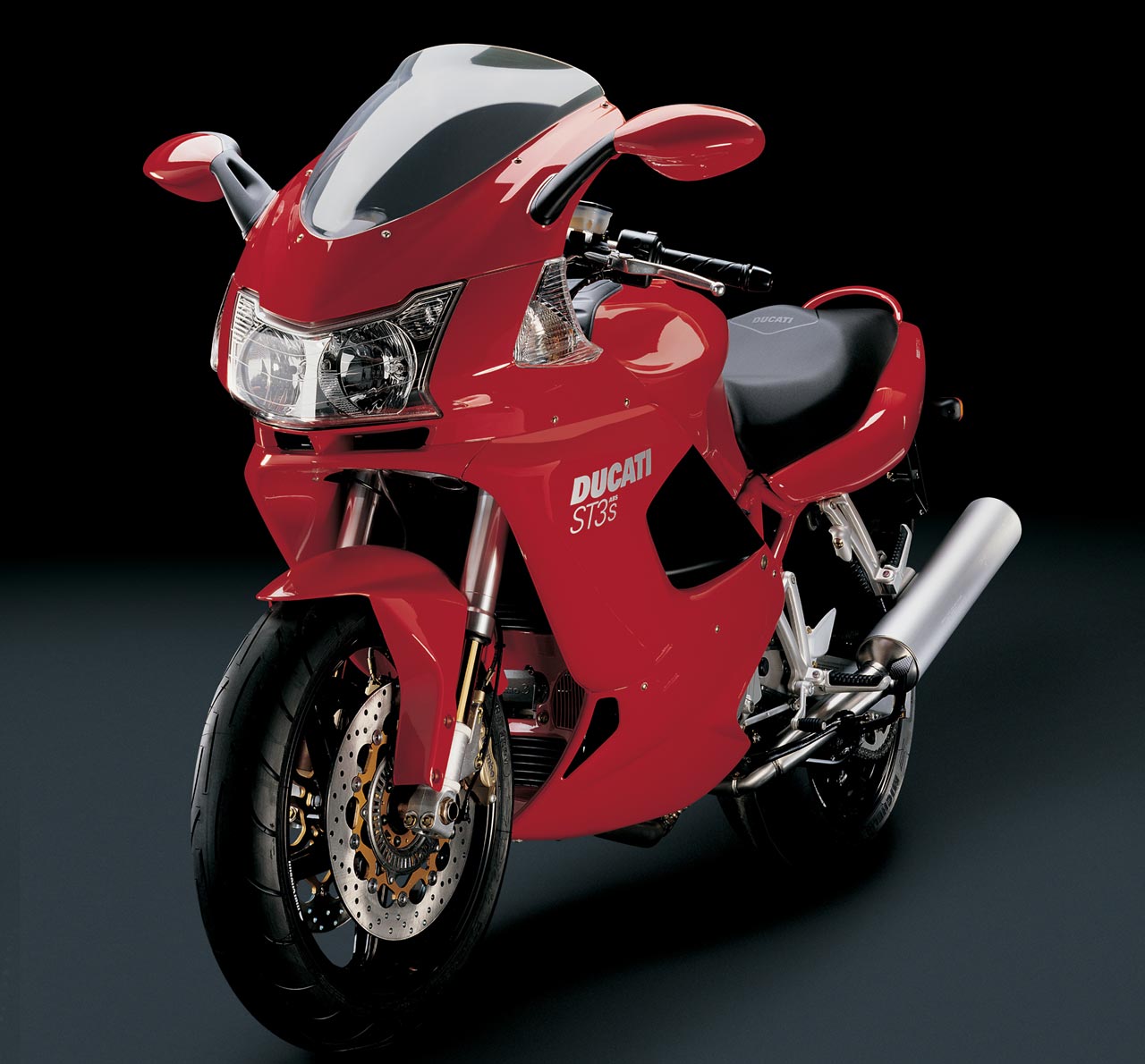

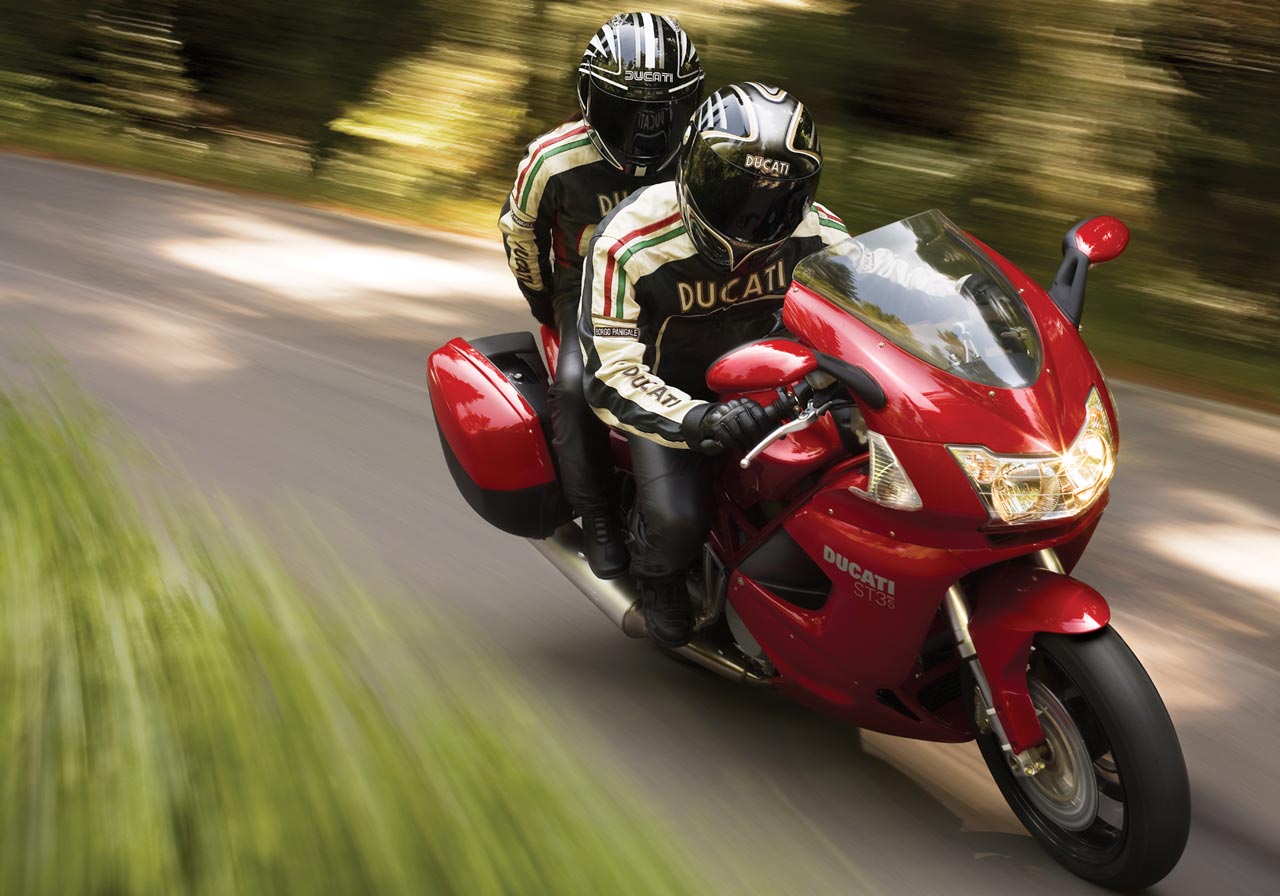

– 2006 Ducati ST3S ABS
2006 Ducati ST3S ABS
OUTSTANDING SAFETY AND FIERY SPORTS PERFORMANCE
The new ST3s ABS brings together the very best components – derived from extensive race track experience – and unparalleled comfort, making it ideal for day-to-day use or long-range touring.
The 992 cc Desmo3 is the ideal match to the ST3s ABS chassis with its fully adjustable TiN-coated 43 mm upside down Showa forks, a fully adjustable Öhlins rear shock, a lightweight aluminium rear swingarm and ultra-light Marchesini 5-spoke wheels.
The Brembo brake system, with ABS specially designed for sport oriented riders, features a design that manages the front and rear brake circuits separately. Additionally, the ABS system can be de-activated by the rider, and shuts itself off in the event of a malfunction.
The instrument panel includes an analogue rev-counter and an on-board computer with liquid crystal display, which, in addition to standard info it keeps tabs on fuel consumption, range on remaining fuel, and more. And as an added convenience, headlight beam height adjustment is electronically controlled from the instrument panel.
For added security, all the bikes in the ST family feature an antitheft immobilizer system, making it impossible to start the engine without the unique electronic ignition key. With the introduction of the 2006 range, Ducati Sporttouring motorcycles are now even more environmentally responsible, and comply with the strict Euro3 emissions standards.
Features:
DUCATI SPORT TOURING
In response to massive public demand the three-valve per cylinder engine takes centre stage in the ST range for the 2006 M.Y. The standard version is thus joined by the ST3S ABS, in place of the previous ST4s, the flagship of this family up to the end of last season.
This means that the price list is simplified, with two versions offering the original equipment package plus a series of major innovations.
The 2006 model is equipped with a new automatic idle speed control system and, above all, features Euro 3 homologation in compliance with future emission control regulations. This major breakthrough, which anticipates the date of enforcement of the more stringent emission limits by more than twelve months, was achieved by adopting an integrated ignition, injection and exhaust system, with a special 3-way catalytic converter and heated Lambda oxygen sensor. Thanks to this design strategy, the ST3S ABS and ST3S ABSs machines scheduled to roll of the lines at the Ducati Borgo Panigale plant will be among the world’s first bikes to comply with the emission limits due to take effect on 1 January 2007, so they can be ridden even in cities that restrict non-complying vehicles.
The evolution of the injection and ignition system, combined with automatic idle speed control, are among the most recent milestones in a continuous process of updating a range of machines specifically designed for touring enthusiasts seeking comfort and a high level of protection from the elements without sacrificing performance muscle. The earlier editions had already received various modifications designed to meet the more practical needs of a Sport Touring machine. For example, the wet clutch, which is smoother, quieter and more progressive than the unit installed on more highly tuned Ducati motorcycles while also offering much longer than average service life; in addition, a large number of updates have been made to the machine with the aim of optimising the level of protection and, consequently, the overall comfort on long high-speed journeys.
Evolved and further refined with each new edition, the Sport Touring range achieves perfect balance with the arrival of the three-valve per cylinder engine, as demonstrated by the fact that this twin cylinder powerplant won immediate approval from the market thanks to its broad flat torque curve and low fuel consumption.
The state of the art achieved since 1997 when the first ST was unveiled is such that Ducati has been able to attain a position of excellence in a segment in which rival motorcycle makers can boast many years more experience than the Bologna company. The current high standing on the touring market is largely due to Ducati’s reinterpretation of the sports touring motorcycle and the implementation of a number of innovative devices. Consider, for example, the many adjustment facilities on the machine including the position of the handlebars, electronic control of the headlight beam angle and two alternative positions for the exhaust system. The two tailpipes can be mounted in a low-slung position so that the machine can be equipped with a pair of panniers, or in a raised position to increase the lean angle for riders seeking extreme lean angles. There are also many apparently minor aspects, such as the simplified fitting system for the fairings, which reduces times and costs for servicing and repair work, and management of the electronic system with a CAN line, with the network carried on just two wires in place of the classic harness.
ST3s ABS
The main properties are identical to the basic ST3 model, with which the ST3s ABS shares all dynamic contents and characteristics. But the ST3s ABS goes still further in terms of chassis, running gear and safety aspects. Although frame and engine are the same, the difference lies in the suspension and brakes, which are selected for higher performance and feature an ABS antilock braking system. On this model it’s impossible to miss the fully adjustable upside-down fork with TiN coating on the stanchions, or the Ohlins shock with remote preload adjustment so that the setup can be rapidly adapted to suit load and road conditions. And no formal presentation is required for the efficient ABS system, specifically designed for riders who insist on the same level of control in emergency braking conditions as that currently available on many production cars.
Style
The stylistic approach remains unchanged since all the main style features are shared with the basic ST3 version. To distinguish the ST3s ABS at first glance just take closer look at the wheels: this machine is equipped with five-spoke wheels, while the standard model ST3 has simpler three-spoke units. Further differences are evident in the braking system, which has been integrated with the ABS sensors, or in the suspensions, which are technically more advanced, or, more simply, by checking out the logo on the body. Otherwise all features are shared by both versions, from the colour range to the height adjustable clip-ons and the multifunction instrument panel, which handles all the information arriving on the Controller Area Network (CAN) line technology pioneered by Ducati in the motorcycle sector that makes it possible to reduce the complexity of wiring on the machine.
Chassis
Although performance is identical to the standard ST3, for the top of the range version designers decided to add various components to emphasise the sporting aspect of this touring machine with excellence and thrilling performance levels. In this context, the trellis frame is mounted with suspension systems derived directly from the series installed on the more strictly competition-oriented Ducati machines. The front end is therefore equipped with a fork that offers the maximum number of personalisation options for riders seeking the ideal suspension setup for all types of riding conditions. The forks are by Showa, on which the stanchions are TiN coated – a process normally reserved for competition machines, designed to reduce sliding friction to the absolute minimum. Needless to say, the fork offers full adjustment facilities for compression and rebound, like the adjustments on the rear Ohlins shock, which also features the possibility of adjusting preload by means of an external control that can even be operated with the need for tools. The dimensions of the brake rotors are the same as those of the ST3, with 245 mm for the rear disc and a pair of semi-floating 320 mm front discs. Apart from the various parts of the ABS system, a further detail that characterises the high-end version of the ST3 is the front rotor flange in lightweight aluminium alloy to keep rotating mass down to the absolute minimum.
ABS system
Inherited directly from the ST4s ABS, the antilock brake system developed by Ducati features more advanced functions than most motorcycle ABS systems on the market. The aim is clearly that of providing the fastest possible response and eliminating the risk of locking up the wheels on treacherous road surfaces or under emergency braking conditions. The device ensures separate management of all the information transmitted to the ABS control unit from the speed sensors on the discs responsible for reading movement. The relative data are kept separate and constantly analysed by means of dedicated software that compares average road speed with the instantaneous speed measured on each wheel. If the ratio between the two values falls below specific safety limits the control unit acts exclusively on the calliper that is currently receiving excessive pressure. The immediate pressure drop on just one of the brake circuits, achieved by the action of a series of valves, thus eliminates the risk of wheel lock-up before pressure is once again distributed in full, with closure of the relief valve when the ratio returns to within the safety level. With respect to the average motorcycle ABS system, the system developed for the ST3s offers more sensitive control for the rider, with a feel that is very close to that of a conventional brake system without ABS. Another benefit is constituted by the ability to guarantee normal stopping distances even in the case of electronic faults.
Powerplant
There are no engine differences with respect to the ST3. The more strictly sports personality is due to the chassis and running gear, while thanks to the excellent performance of the super-modern three-valve per cylinder powerplant no modifications are called for in this area. Of course, we could boost power output, but more important is the excellent balance between performance, flexibility, and fuel consumption that has been a hallmark characteristic of the magnificent Desmotre since it was first produced. Moreover, the ST3s ABS is one of the few bikes currently on the available to have complied with the important future environmental standards of Euro3.
Chassis:
Frame Tubular steel trellis
Wheelbase 1430 mm / 56.3 in
Rake 24°
Front suspension Showa 43 mm upside-down fully adjustable fork with TiN surface treatment
Front wheel travel 130 mm / 5.1 in
Front brake 2 x 320 mm semi-floating discs, 4-piston caliper, ABS controlled
Front wheel 5-spoke light alloy 3.50 x 17
Front tyre 120/70 ZR 17
Rear suspension Progressive linkage with fully adjustable Öhlins monoshock with remote control preload adjustament. Aluminium swingarm
Rear wheel travel 148 mm / 5.8 in
Rear brake 245 mm disc, 2-piston caliper, ABS controlled
Rear wheel 5-spoke light alloy 5.50 x 17
Rear tyre 180/55 ZR 17
Fuel tank capacity 21 L / 5.5 US gal (includes 6 L / 1.5 US gal reserve)
Weight * 204 kg / 449.3 lbs
Seat height 820 mm / 32.3 in
Instruments Electronic instrument panel using CAN communication protocol with CPU, multifunctional digital display (including speedometer, clock, water temperature, fuel gauge, instant/average consumption, consumed fuel, remaining distance), analog rev counter, self-
Warranty 2 years unlimited mileage
Colour combinations:
(Tank-Frame-Wheels) (red-red-black) (Senna grey-metallic grey-fluorescent red) (black-black-grey)
Versions Dual seat
* = The weight excludes battery, lubricants and, where applicable, cooling liquid.
ENGINE
Type L-twin cylinder, 3 valves per cylinder Desmodromic; liquid cooled
Displacement 992 cc
Bore x Stroke 94 x 71.5 mm
Compression Ratio 11.3:1
Power* 78.8 kw – 107 hp @ 8750 rpm
Torque* 10 kgm (72.3 lb-ft) @ 7250 rpm
Fuel injection Marelli electronic fuel injection, 50 mm throttle body
Exhaust 2 aluminium mufflers with catalytic converter and lambda sensor
Emissions Euro 3 (except USA version)
TRANSMISSION
Gearbox 6 speed
Ratios 1st 37/15, 2nd 30/17, 3rd 27/20, 4th 24/22, 5th 23/24, 6th 24/28
Primary drive Straight cut gears; ratio 1.84
Final drive Chain; Front sprocket 15; Rear sprocket 42
Clutch Wet multiplate with hydraulic control
Colors:
|

Be the first to comment